Everything You Need to Know About Proof in Whiskey
Proof is a statistic that many whiskey drinkers pay a lot of attention to. But what does it actually mean besides how much alcohol you'll find in a bottle?
Gina Pace · Jul 22, 2026
Proof is one of the first things drinkers ask about a bottle. It’s a shorthand for strength, intensity, and for some it can even indicate authenticity. But for all its ubiquity, a whiskey’s proof doesn’t actually tell you everything you need to know.
“Proof is simply a measure of a whiskey’s alcohol content,” said Justin Aden, master blender for Stranahan’s American Single Malt in Denver. “In the U.S., proof is double the alcohol by volume (ABV), so an 80‑proof whiskey is 40% alcohol by volume.”
Simple enough. The trouble starts when drinkers assume the number is a verdict.
According to Aden, higher proof essentially means less water in the whiskey, which in turn signals a greater concentration of flavor and aroma compounds. “Higher proof means less water present, signaling a higher concentration and potency of organoleptic compounds,” he explained, referring to the sensory properties of a substance such as taste, color, odor, and texture. That concentration can make a whiskey feel bolder, more intense, even more “true” to the spirit’s core. But intensity isn’t the same thing as clarity. “It is preferred for illuminating the soul of a whiskey, but perhaps not its nuances or perfect form.”
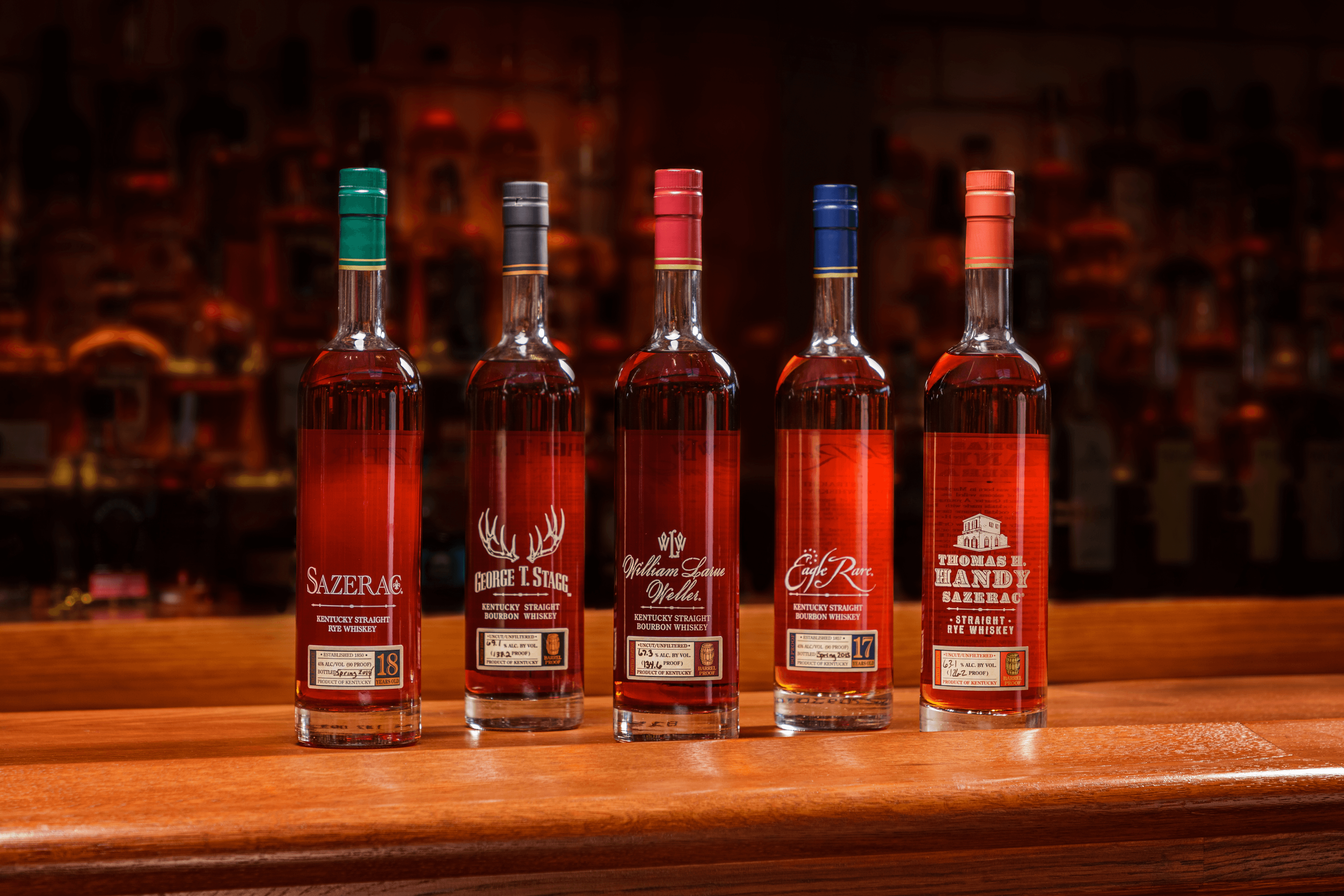
On the flip side, Aden explained that lower proof generally equates to a lighter mouthfeel. Adjusting proof isn’t just about taste, though—it’s also about accessibility. “The two major considerations are flavor and price point,” said Aden. In the case of Stranahan’s, Rocky Mountain spring water is cheaper than whiskey, so lowering the proof can make a bottle more affordable on the shelf. Limited releases, meanwhile, might be bottled uncut or “straight from the barrel,” offering the whiskey in its most unadulterated form.
Proofing Deciscions
Distilleries make proof decisions long before bottling. Every producer chooses the proof at which they distill—within certain guidelines, this number determines how much character is carried over from fermentation. They also choose the proof at which whiskey enters the barrel (again, this is regulated by category), a decision that shapes extraction, texture, and long‑term maturation.
Some distilleries, like Michter’s, famously use a low entry proof (103) because they believe it yields richer, deeper flavor over time. Others go with a higher entry proof to change how the spirit interacts with the wood, pulling different compounds, creating a leaner structure, or emphasizing certain tannins and spice notes. And finally, there’s bottling proof, which is the point when distillers decide how the whiskey should present itself to drinkers.
Proof choices aren’t arbitrary, however; they’re part of how distilleries engineer identity. The proof at distillation determines how much character survives the still, the proof going into the barrel dictates extraction and structure, and the bottling proof decides how the whiskey behaves in the glass.
That final bottling decision is also where the booming world of barrel‑proof whiskey comes in. Labels like Booker’s and Elijah Craig Barrel Proof have helped popularize the idea that “straight from the barrel” is the most authentic expression of a whiskey. Legally, barrel‑proof or cask‑strength whiskey can vary by a couple of degrees from the exact proof it leaves the barrel, but it must remain within that narrow window. Some releases even push into hazmat territory—above 140 proof—a range recently explored by Jack Daniel’s in several limited high‑proof drops, including the Coy Hill High Proof, the Small Batch Special Release, and multiple batches of Single Barrel Barrel Proof that have crept into the hazmat range.
Proof Isn't Just For Whiskey
Whiskey isn’t the only spirit shaped by proof. Marc Plumridge, Head of Design, Global Programs & Advocacy for Bombay Sapphire gin, pointed out that proof varies globally not because of production constraints, but because of long‑established consumer expectations. “Historically, consumers in markets such as the United States, Japan, and South Korea have tended to favor higher‑strength spirits,” he said, “whereas many European markets have traditionally preferred the style and character delivered at 40% ABV.” That’s why Bombay Sapphire is bottled at 40% ABV in the U.K. and 47% in the U.S.—not because one is necessarily “better,” but because each expresses the same botanical profile in a way that fits local taste.
Plumridge also noted that alcohol acts as a conduit for aroma and flavor, meaning proof subtly shapes how botanicals present. “At a higher strength, aromatic compounds can appear more concentrated… At a lower strength, flavors can feel softer, more open and immediately approachable.”
Taken together, these choices—distillation proof, entry proof, bottling proof, and even market‑specific proof—show that alcohol strength is less a fixed identity than a deliberate stylistic choice. Proof becomes a way of shaping how long a spirit speaks, how clearly it expresses itself, and how much of its nuance reaches the drinker.
But as Aden points out, those choices only matter insofar as they shape perception—and perception has limits. For drinkers who treat cask strength as the “truest” form of a whiskey, he notes that tasting isn’t a linear equation. Different compounds have different sensory thresholds, and at very high proofs they can compete, mask, or overwhelm one another.
“Cask strength will likely diminish perception acuity faster,” he said, referring to the ability to keep tasting sharply before the palate begins to fatigue, what drinkers often describe as blowing their palate out. “A little bit lower proof might reveal different notes and allow one to experience a whiskey a little longer.”
extendedBiddingModal.title
extendedBiddingModal.subtitle
extendedBiddingModal.paragraph1
extendedBiddingModal.paragraph2